
Restaurant Cleaning in Dubai
Restaurants require an organised cleaning plan that considers operating hours, staff movement, food preparation areas, dining spaces, counters, corridors, storage areas, and floors exposed to grease, crumbs, and continuous use. Home Xa Services provides professional restaurant cleaning in Dubai through a scope agreed with management. The service may include the dining area, exterior surfaces of tables and chairs, counters, corridors, floors, wipeable walls, accessible back-of-house areas, and agreed facilities. Wider cleaning is coordinated after food preparation has stopped and food, utensils, and preparation tools have been removed from the work area.
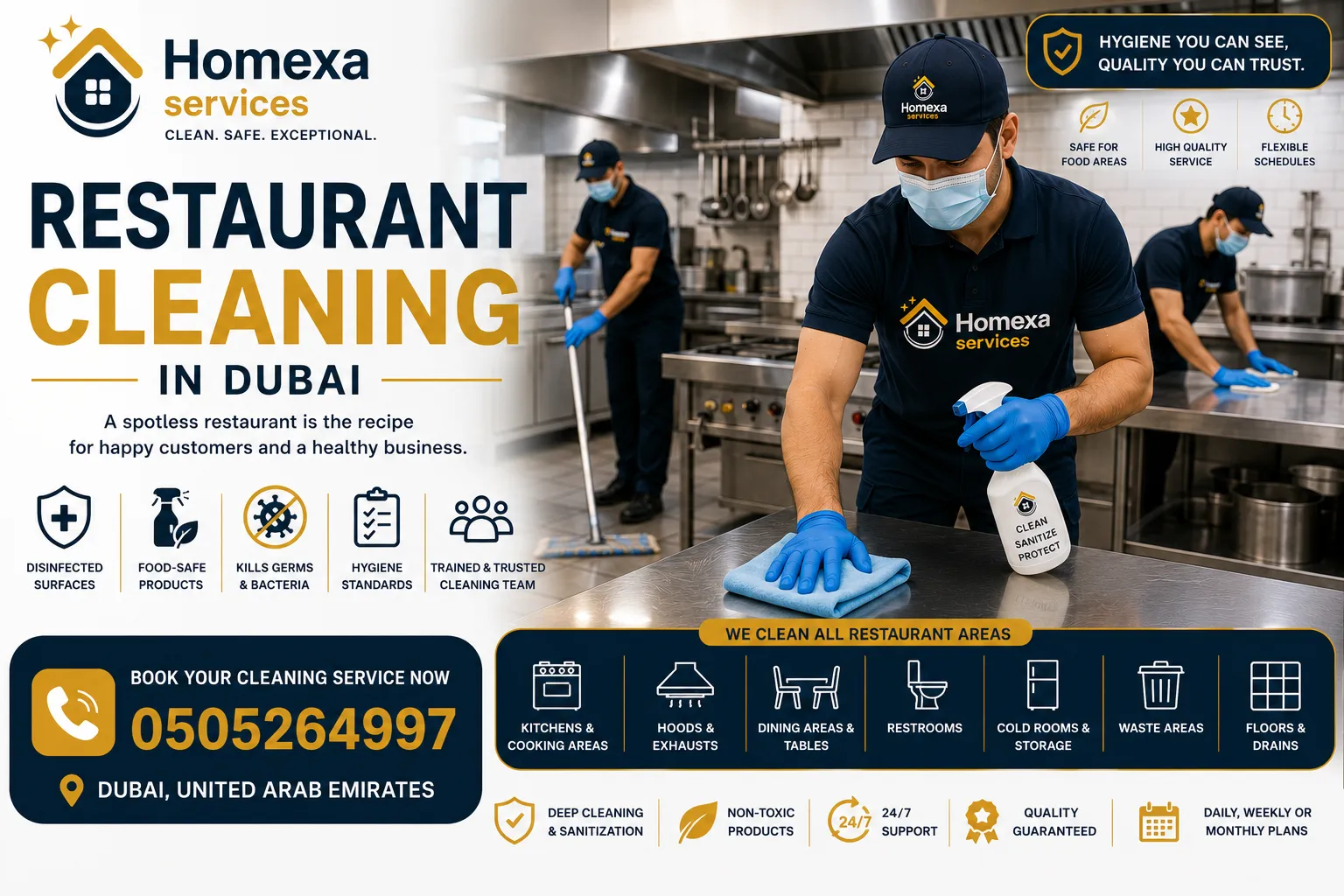
A restaurant differs from an ordinary commercial space because the cleaning challenges are not limited to dust and shoe marks. Light grease can settle on surfaces near preparation areas, crumbs and packaging residue can collect on floors, and fingerprints quickly appear across doors, interior glass, counters, and handles.
The dining area needs to remain visually organised and comfortable for guests, while back-of-house areas often require attention to floors, edges, accessible spaces below equipment, and exterior surfaces. The same method cannot be used in every area because materials, grease levels, and daily activity differ.
Before cleaning begins, exposed food, utensils, preparation tools, and movable items must be cleared from the surfaces included in the work. Management must also identify equipment that can be cleaned externally and areas that must not be entered or disturbed.
The service begins with an inspection of the dining area, counter, kitchen, corridors, storage spaces, washrooms, flooring materials, and grease buildup. The restaurant is then divided into work zones to reduce the movement of dirt and moisture from washrooms or back-of-house areas into guest spaces.
Every Restaurant Area Has a Different Soil and Traffic Pattern
The dining area differs from the service counter, and the back-of-house area differs from storage rooms and washrooms. Cleaning tools, products, and work routes are therefore selected according to each zone.
This separation helps reduce the transfer of grease, crumbs, moisture, and dirt between different areas and makes the final inspection more structured.
Dining Area
The agreed scope may include floors, tables, chairs, edges, doors, and accessible exterior surfaces.
Counter and Reception Area
These surfaces receive fingerprints, crumbs, and repeated contact during ordering, payment, and collection.
Accessible Preparation Areas
Exterior surfaces are cleaned after food and preparation tools have been removed and equipment boundaries confirmed.
Back-of-House Corridors
These routes receive staff, trolleys, packaging materials, floor marks, and grease residue.
Storage Areas
Accessible floors and aisles can be cleaned without opening packages or moving stock unless separately agreed.
Washrooms
Washrooms are completed through an independent route using tools kept separate from dining and preparation areas.
Which Restaurant Areas Usually Need the Most Attention?
Traffic routes, preparation-adjacent surfaces, corners, and frequently touched points are reviewed so the service focuses on details most affected by daily use.
Floor Edges and Corners
Crumbs, dust, and wiping residue often collect below furniture and beside walls where quick cleaning may not reach.
Below Tables and Chairs
Food residue, footprints, and hidden dirt may remain below dining furniture even when the visible area looks tidy.
Preparation-Adjacent Surfaces
Light grease films may form on nearby surfaces and require a method suited to the material and finish.
Doors and Handles
Repeated contact can leave fingerprints and grease marks throughout restaurant operating hours.
How Are Different Restaurant Surfaces Cleaned?
Each material is reviewed before moisture or grease-removal products are used. Abrasive tools are avoided on sensitive finishes, and liquids are kept away from electrical openings and internal components.
Stainless Steel
Exterior surfaces are cleaned in a controlled direction to reduce visible wiping marks and unnecessary scratching.
Wooden Tables
Moisture is controlled according to the finish and condition without soaking edges, joints, or exposed wood.
Tiles and Grout Lines
Suitable grease and soil are treated with attention to edges, corners, and accessible drainage areas.
Rubber Flooring
Tools and products are selected to avoid leaving a slippery film or affecting the surface bond.
Interior Glass and Mirrors
Dust, fingerprints, and visible wiping marks are reduced from accessible glass surfaces.
Equipment Exteriors
Only approved exterior surfaces are cleaned while liquids remain away from openings, controls, and connections.
Service Counters
Counters are treated according to their material after food, paperwork, utensils, and movable equipment have been removed.
Upholstered Seating
Upholstery is not automatically included in surface cleaning and requires a separate assessment based on fabric and condition.
Restaurant Cleaning Process
Work begins by confirming closing time and the required service scope, followed by clearing the work area, zoning the restaurant, removing dry soil, treating suitable grease, cleaning floors and washrooms, and completing a final inspection.
Coordinating with Management
Arrival time, closing time, contact person, access instructions, and restricted areas are confirmed.
Inspecting the Restaurant
The dining area, counter, kitchen, corridors, storage spaces, and washrooms are reviewed.
Assessing Grease Buildup
The condition of floors, edges, exterior surfaces, and preparation-adjacent areas is evaluated.
Clearing the Work Area
Food, dishes, utensils, and preparation tools are removed from the surfaces included in the cleaning scope.
Dividing the Restaurant into Zones
Dining, counter, back-of-house, storage, and washroom areas are placed into separate work routes.
Collecting General Waste
Crumbs, packaging, and suitable ordinary waste are collected from the agreed areas.
Removing Dust and Dry Soil
Dust is removed from edges, tables, chairs, counters, and accessible exterior surfaces.
Treating Suitable Grease
A method suited to the surface and buildup level is used without soaking electrical equipment or sensitive materials.
Cleaning Floors
Traffic routes, edges, corners, joints, and accessible drainage areas receive focused attention.
Cleaning Washrooms Separately
Washroom tools remain outside the cleaning route used for dining and food preparation areas.
Reviewing Dryness and Safety
Floors and surfaces are checked and unnecessary moisture, waste, and cleaning tools are removed.
Handover to Management
Completion of the agreed scope is confirmed and any visible damage or concern noticed during cleaning is reported.
What Can Restaurant Cleaning Include?
The final scope depends on the restaurant area, type of operation, flooring materials, grease level, service zones, access requirements, and available working time.
Dining Area Cleaning
Cleaning agreed floors, tables, chairs, edges, and accessible exterior surfaces.
Counter Cleaning
Cleaning the counter exterior and accessible sections after food, utensils, and movable contents have been removed.
Table and Chair Cleaning
Cleaning surfaces, edges, legs, and agreed furniture sections according to their materials.
Floor and Joint Cleaning
Removing dust, crumbs, and suitable grease from traffic routes, corners, and edges.
Equipment Exterior Cleaning
Cleaning visible and accessible exterior surfaces without dismantling equipment.
Back-of-House Corridor Cleaning
Removing suitable soil and traffic marks from staff and trolley routes.
Interior Glass Cleaning
Reducing dust, fingerprints, and visible wiping marks from accessible interior glass.
Washroom Cleaning
Separate cleaning of agreed basins, mirrors, floors, and accessible washroom surfaces.
How Is Disruption to Restaurant Operations Reduced?
The service time, team route, and available areas are coordinated around food preparation, customer service, closing time, and the planned reopening of the restaurant.
Selecting an After-Hours Period
Wider cleaning is preferably completed after customer service and food preparation have ended.
Removing Food and Utensils
Exposed food, dishes, bottles, and preparation tools must be removed from the cleaning area.
Working Zone by Zone
The dining area or back-of-house section is completed before the team moves to the next approved zone.
Controlling Equipment Movement
Cleaning tools are positioned away from emergency exits and essential access routes.
Reviewing Floors Before Reopening
Floors are checked for unnecessary moisture and residue before the area returns to use.
Handover to the Restaurant Representative
The completed scope is reviewed and the responsible person is informed that the area is ready for inspection.
Services Not Automatically Included in General Restaurant Cleaning
Some duties require a specialist technician, a separate protocol, or specific authorisation and are not automatically completed during ordinary restaurant cleaning.
Internal extraction systems require a separate service defining filters, fans, ducts, access, and dismantling requirements.
The service does not automatically include dismantling ovens, refrigerators, or equipment or cleaning internal components.
These require a specialist service and are not treated as ordinary surface or floor cleaning.
General cleaning does not include food preparation, food washing, dishwashing, or handling serving utensils.
Unknown chemicals are not touched, moved, mixed, or discarded before management identifies them.
Cooking oil requires an approved collection and disposal system and is not treated as ordinary cleaning waste.
Pest control is not automatically included and requires a separately arranged service programme.
Cleaning does not include repairing equipment, floors, leaks, drains, extraction systems, or electrical faults.
What Can Cleaning Improve and What Requires Another Service?
Restaurant cleaning can remove suitable dust, crumbs, fingerprints, shoe marks, and surface grease. It does not repair permanent damage, equipment faults, drainage issues, or hidden grease inside extraction systems.
Conditions That May Improve Clearly
- Crumbs and ordinary loose waste across floors.
- Light grease films on suitable exterior surfaces.
- Fingerprints on doors, interior glass, and counters.
- Shoe and trolley marks on suitable floor materials.
- Soil around accessible edges and corners.
- A dull appearance caused by removable surface buildup.
Conditions Cleaning Alone Does Not Repair
- Damaged furniture or peeling surface finishes.
- Oven, refrigerator, or equipment faults.
- Deep scratches or permanent discolouration.
- Damaged flooring or separated flooring layers.
- Leaks, drainage problems, and hidden moisture sources.
- Internal grease inside ducts and extraction systems.
What Do We Need Before Confirming the Restaurant Cleaning Appointment?
Photographs, approximate area, restaurant activity, grease level, flooring materials, closing time, and required zones help determine the team, service duration, and cleaning method.
Complete Restaurant Photos
Send photographs of the dining area, counter, kitchen, corridors, storage spaces, and washrooms.
Approximate Floor Area
Provide the total restaurant area or the approximate size of each zone where available.
Restaurant Activity
Explain the type of food preparation and the level of oil and grease used during operations.
Closing Time
Confirm the working period available after orders and food preparation have ended.
Flooring Materials
Confirm whether the restaurant contains tiles, epoxy, vinyl, rubber, stone, or other floor materials.
Grease Buildup Level
Send close photographs of the floors, surfaces, edges, and areas most affected by grease.
Required Service Scope
Confirm the dining area, counter, kitchen, storage rooms, corridors, and facilities to be included.
Dubai Location
Send the area together with parking, loading, lift, security, and access instructions.
Management Instructions
Identify restricted equipment, sensitive zones, permitted products, and any special operating requirements.
Frequently Asked Questions About Restaurant Cleaning in Dubai
Direct answers about quotations, kitchen areas, grease buildup, appliances, extraction systems, working hours, and recurring cleaning.
How much does restaurant cleaning cost in Dubai? +
The quotation depends on the restaurant area, type of operation, grease level, flooring materials, required zones, and available working time. Send photographs and details through WhatsApp on 0505264997 for an initial assessment.
Can the restaurant be cleaned during operating hours? +
Limited work may be possible inside a closed and controlled area, but wider cleaning is generally more suitable after closing, food preparation has stopped, and food and utensils have been removed.
Does the service include the restaurant kitchen? +
The agreed scope may include floors, accessible exterior surfaces, and selected preparation-area sections after food, tools, and utensils have been cleared and equipment boundaries confirmed.
Can accumulated grease be removed? +
Suitable surface grease may be treated according to the material and buildup level. Old grease inside equipment, ducts, extraction systems, or inaccessible components requires a separate service.
Does the service include hood and duct cleaning? +
Exterior surface cleaning does not include internal hood, filter, fan, or duct cleaning. These areas require a separate inspection and specialist scope.
Are appliances cleaned internally? +
Internal appliance cleaning, dismantling, repairs, and maintenance are not automatically included. Each appliance and required scope must be confirmed separately.
Does restaurant cleaning include full disinfection? +
General cleaning and specialist disinfection are separate services. Disinfection requires a confirmed scope defining the products, target surfaces, application method, and contact period.
Can a recurring restaurant cleaning schedule be arranged? +
A recurring schedule can be discussed according to the restaurant area, operating hours, level of daily use, grease buildup, and the required scope for each visit.