
Clinic Cleaning in Dubai
A clinic receives patients, visitors, and staff through a continuous appointment schedule. It therefore requires organised cleaning that supports the normal operation of reception areas, waiting rooms, available consultation rooms, corridors, floors, and frequently touched surfaces. Home Xa Services provides professional clinic cleaning in Dubai for agreed areas such as reception counters, waiting chairs, accessible consultation rooms, internal glass, doors, handles, floors, and washrooms. The service is completed according to the clinic manager’s instructions and clearly defined boundaries around medical equipment, supplies, records, and restricted rooms.
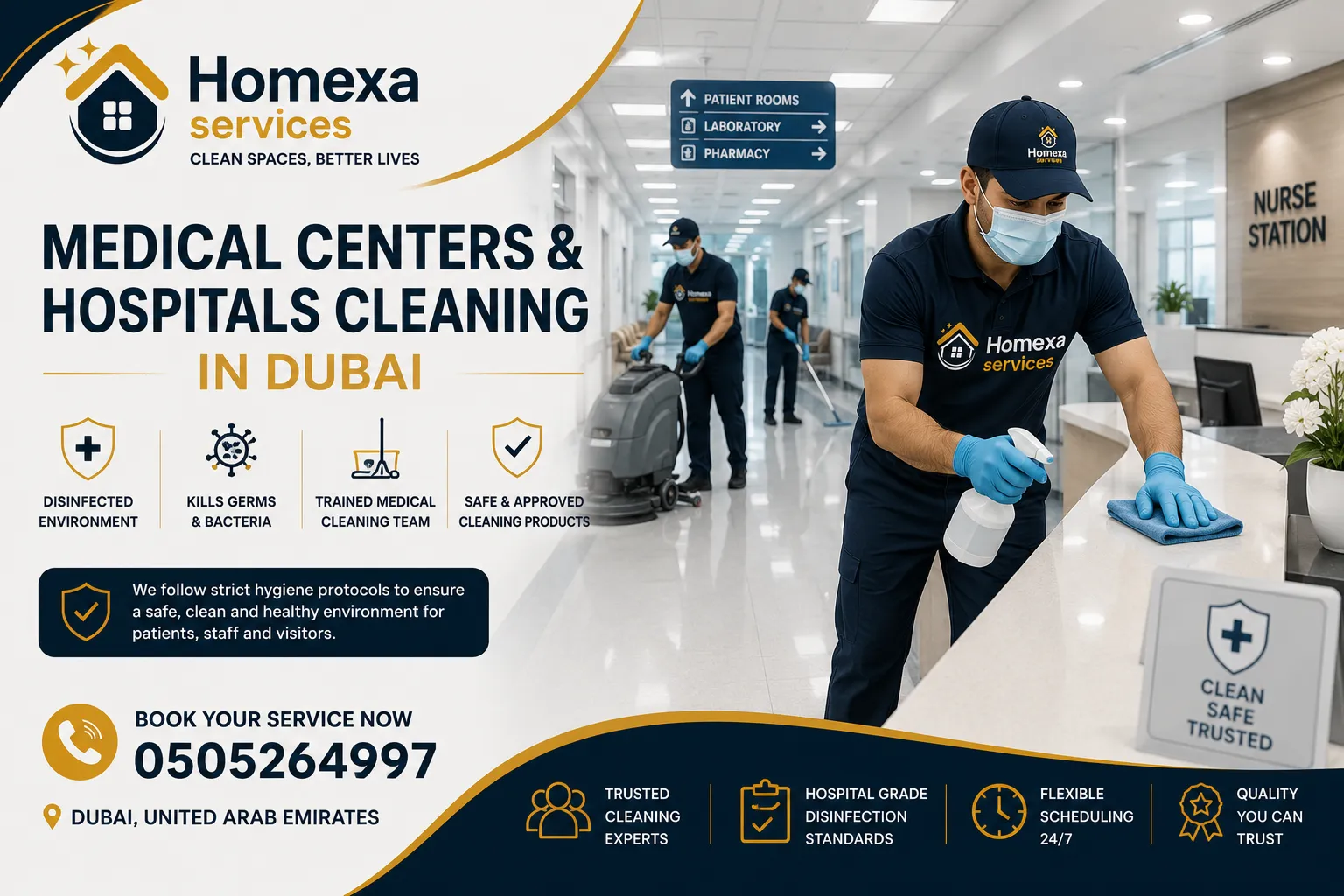
A clinic differs from an ordinary office or retail unit because patients follow a defined route through the property. They enter through the main door, move to reception, wait for their appointment, and then continue into a consultation or examination room. Each point in this journey receives a different level of movement and contact.
Signs of daily use appear quickly on entrance doors, handles, waiting chairs, tables, reception counters, and the floors close to the entrance. Dust may also collect around furniture bases, below chairs, along wall edges, and beside equipment that is not moved during routine daily cleaning.
Consultation rooms require a more controlled approach. Accessible exterior surfaces, furniture, and floors can be cleaned, but cabinets are not opened and medical instruments, supplies, files, and medicines are not moved without clear permission from the clinic manager.
The service therefore begins by confirming the clinic area, room quantity, operating hours, suitable service period, restricted zones, and surfaces included in the quotation. The team’s route is then organised from lower-use rooms toward more active areas, while washroom tools remain separate from those used in reception and consultation rooms.
Cleaning Priorities Follow Movement from the Entrance to the Consultation Room
Not every section of a clinic receives the same level of traffic. Entrances, reception counters, and waiting chairs receive more frequent contact, while internal rooms require permission and coordination before entry.
Understanding this movement helps the team focus on frequently used areas without overlooking accessible edges, floors, corners, and lower sections around furniture.
Main Entrance and Door
These areas receive outdoor dust, shoe marks, fingerprints, and repeated contact throughout the working day.
Reception Area
Accessible counter exteriors, edges, and nearby floors can be cleaned without moving devices, records, or documents.
Waiting Room
Chairs, tables, floors, and surrounding walkways receive continuous use from patients and accompanying visitors.
Internal Corridor
Shoe marks and dust commonly appear near doors, corners, and transition points between clinic rooms.
Available Consultation Room
Accessible furniture exteriors, surfaces, and floors are cleaned without handling medical instruments or internal contents.
Washrooms
Washrooms are cleaned through a separate route using tools that remain outside reception and consultation rooms.
Which Clinic Surfaces Receive the Most Contact?
High-use points are identified within the agreed scope so the service addresses regularly touched details instead of concentrating only on the floors.
Door Handles
Handles receive repeated contact whenever patients, staff, and visitors enter or leave clinic rooms.
Waiting Chairs
Accessible armrests, backrests, edges, and wipeable exterior surfaces are treated according to the chair material.
Reception Counter
Accessible exterior sections are cleaned without moving papers, files, computers, payment equipment, or other devices.
Light Switches and Buttons
Exterior surfaces receive controlled attention while moisture is kept away from electrical openings and surrounding gaps.
How Are Different Rooms and Areas Cleaned?
The cleaning scope depends on each room’s function, availability, condition, contents, and the instructions provided by the responsible clinic representative.
Reception
Cleaning accessible floors, counter exteriors, doors, edges, and approved surfaces without moving clinic records.
Waiting Room
Cleaning chairs, tables, floor edges, walkways, and accessible surfaces around the seating area.
Consultation Room
Cleaning accessible furniture exteriors, surfaces, and floors after the room has been made available.
Doctor’s Office
Cleaning available surfaces while documents, devices, records, and paperwork remain in their original positions.
Measurement Area
The cleaning scope is confirmed according to the equipment and access permitted by clinic management.
Corridors
Removing dust, suitable shoe marks, and buildup along accessible wall edges and movement routes.
Internal Glass and Mirrors
Reducing dust, fingerprints, and visible wiping lines from accessible interior glass surfaces.
Washrooms
Separate cleaning of agreed floors, basins, mirrors, and accessible washroom surfaces.
Clinic Cleaning Process
Work begins by confirming available rooms and clinic instructions and ends with a review of floors, surfaces, corridors, remaining moisture, and cleaning equipment before the area returns to use.
Coordinating with the Responsible Person
The service time, available rooms, restricted areas, and access instructions are confirmed before work starts.
Inspecting the Clinic
Reception, waiting rooms, consultation rooms, corridors, floors, glass, and washrooms are reviewed.
Confirming the Service Scope
Included surfaces, protected equipment, restricted contents, and items that must remain untouched are clearly identified.
Dividing the Clinic into Zones
Rooms are arranged according to availability, usage level, appointment times, and patient movement.
Removing Dry Dust
Dust, crumbs, and suitable loose debris are removed from accessible furniture, edges, corners, and floors.
Cleaning High-Touch Points
Agreed door handles, panels, chairs, switches, counters, and exterior surfaces receive focused attention.
Cleaning Available Consultation Rooms
Work is completed around accessible furniture and approved equipment exteriors without dismantling devices or opening cabinets.
Cleaning Corridors and Floors
Dust, shoe marks, and suitable stains are treated according to the existing flooring material and condition.
Cleaning Washrooms with Separate Tools
Washroom tools remain separate from those used in consultation, reception, and waiting areas.
Completing the Final Review
The agreed areas are checked and cleaning equipment, waste, and unnecessary moisture are removed.
Handover to Clinic Management
Completion of the confirmed scope is reviewed with the responsible person and visible concerns are reported.
Reopening the Area
Rooms and walkways return to use after the floors and surfaces have been reviewed for readiness.
What Can Clinic Cleaning Include?
The final scope is confirmed according to the clinic area, room quantity, flooring materials, operating hours, access restrictions, and management instructions.
Reception Area Cleaning
Cleaning accessible floors, counter exteriors, doors, edges, and agreed exterior surfaces.
Waiting Room Cleaning
Cleaning agreed chairs, tables, floor edges, corridors, and nearby movement areas.
Consultation Room Cleaning
Cleaning accessible furniture exteriors, surfaces, and floors in rooms approved for entry.
Door and Handle Cleaning
Giving agreed door surfaces and frequently touched entry points focused attention.
Corridor Cleaning
Removing dust, suitable shoe marks, and normal buildup from internal movement areas.
Floor Cleaning
Selecting a suitable method according to the flooring material, condition, and level of soiling.
Internal Glass and Mirror Cleaning
Reducing dust, fingerprints, and wiping lines from accessible interior glass surfaces.
Washroom Cleaning
Separate cleaning of agreed basins, mirrors, floors, and accessible washroom surfaces.
How Is Disruption to Patients and Staff Reduced?
Service timing, available rooms, equipment routes, and corridor access are coordinated according to the clinic’s appointment schedule and quieter operating periods.
Selecting a Quieter Period
The service may be completed during a quieter appointment period or after the clinic closes.
Cleaning One Room at a Time
One available room can be completed before the team moves to the next approved area.
Avoiding Occupied Rooms
The team does not enter a room containing a patient or active procedure without approval.
Defining the Team Route
Cleaning tools are moved away from active entrances and patient routes wherever practical.
Reducing Remaining Moisture
Floors are reviewed before reopening to reduce the risk of leaving unnecessarily wet surfaces.
Coordinated Handover
The area returns to use after cleaning equipment is removed and the agreed work has been reviewed.
Items Not Automatically Included in General Clinic Cleaning
Some situations require a written protocol, authorised specialist, or separate agreement and are not handled as part of normal clinic cleaning.
Sharps are not collected or placed inside ordinary general-waste bags.
Medical waste must be handled through the clinic’s approved containers and disposal system.
These situations require a clearly defined specialist procedure and separate approval.
Medicines, samples, and clinical supplies are not opened, moved, or rearranged by the cleaning team.
The service does not include dismantling, maintenance, internal cleaning, or equipment calibration.
Specialist disinfection is not automatically included and requires a separately defined service scope.
Unknown liquids and chemicals are not touched or moved before review by the clinic representative.
The service does not include equipment, furniture, flooring, plumbing, electrical, or leak repairs.
What Can Cleaning Improve and What Requires a Separate Service?
Cleaning addresses removable dust, fingerprints, shoe marks, crumbs, and suitable surface buildup. It does not repair permanent damage, equipment faults, medical hazards, or hidden moisture sources.
Conditions That May Improve Clearly
- Dust across furniture and accessible exterior surfaces.
- Fingerprints on doors, handles, glass, and mirrors.
- Shoe marks across suitable corridors and floors.
- Dust around accessible edges and corners.
- Crumbs and general loose waste in waiting areas.
- A dull appearance caused by removable surface soil.
Conditions Cleaning Alone Does Not Repair
- Medical equipment or electrical faults.
- Torn chairs and damaged furniture.
- Deep scratches and broken glass.
- Damaged floors or separated floor layers.
- Leaks, hidden dampness, and internal mould sources.
- Medical waste, sharps, and hazardous materials.
What Do We Need Before Confirming the Clinic Cleaning Appointment?
Clinic photographs, approximate floor area, room quantity, operating hours, flooring materials, restricted zones, and the requested scope help determine the required team and service duration.
Complete Clinic Photos
Send wide photographs of the reception, waiting room, corridors, and consultation rooms requested for cleaning.
Approximate Floor Area
Provide the total clinic area in square metres or any available measurements.
Room Quantity
Confirm the number of consultation rooms, offices, washrooms, and other included areas.
Operating Hours
Explain the quieter appointment period or after-hours access available to the team.
Flooring Materials
Confirm whether the clinic contains vinyl, epoxy, tiles, or more than one floor type.
Restricted Areas
Identify rooms, cabinets, devices, or clinical areas that the team must not approach.
Required Service Scope
Confirm the rooms, surfaces, corridors, floors, glass, and washrooms that require cleaning.
Dubai Location
Send the area together with parking, lift, security, and access instructions.
Special Clinic Instructions
Provide any rules related to uniforms, tools, products, permitted rooms, or working times.
Frequently Asked Questions About Clinic Cleaning in Dubai
Direct answers about quotations, consultation rooms, medical equipment, disinfection, medical waste, appointment times, and recurring cleaning.
How much does clinic cleaning cost in Dubai? +
The quotation depends on the clinic area, room quantity, flooring materials, level of buildup, available working time, restricted zones, and required scope. Send photographs and details through WhatsApp on 0505264997 for an initial assessment.
Can the clinic be cleaned while patients are present? +
Work can sometimes be divided into controlled zones, but wider cleaning is generally better completed during quieter appointment periods or after the clinic closes.
Does the service include consultation rooms? +
Available consultation rooms can be cleaned after patients have left and clinic instructions have been confirmed. The service focuses on accessible surfaces, furniture exteriors, and floors.
Are medical devices cleaned? +
Some accessible exterior surfaces may be cleaned after management approval. The service does not include dismantling, maintenance, internal components, calibration, or electrical connections.
Does clinic cleaning include full disinfection? +
Cleaning and specialist disinfection are separate services. Any disinfection work requires a separate agreement defining the product, target surfaces, application method, and required contact period.
Does the team handle medical waste? +
Needles, sharps, medical waste, clinical waste, and hazardous materials are not included in general cleaning and must be handled through the clinic’s approved system.
Are the same tools used in every room? +
Washroom tools remain separate from those used in reception, waiting, and consultation areas. Additional zoning can be arranged according to clinic requirements.
Can a recurring clinic cleaning schedule be arranged? +
A recurring schedule can be discussed according to the clinic area, operating hours, patient traffic, room quantity, and required scope for each visit.