
Medical Facility and Hospital Cleaning in Dubai
Medical centres and hospitals require a carefully organised cleaning plan that considers patient and staff movement, appointment schedules, examination rooms, frequently touched surfaces, and the work zones approved by facility management. Home Xa Services provides professional medical facility and hospital cleaning in Dubai for agreed areas such as reception spaces, waiting rooms, corridors, available examination rooms, furniture exteriors, doors, floors, mirrors, and washrooms. Work is organised to reduce disruption to normal facility operations.
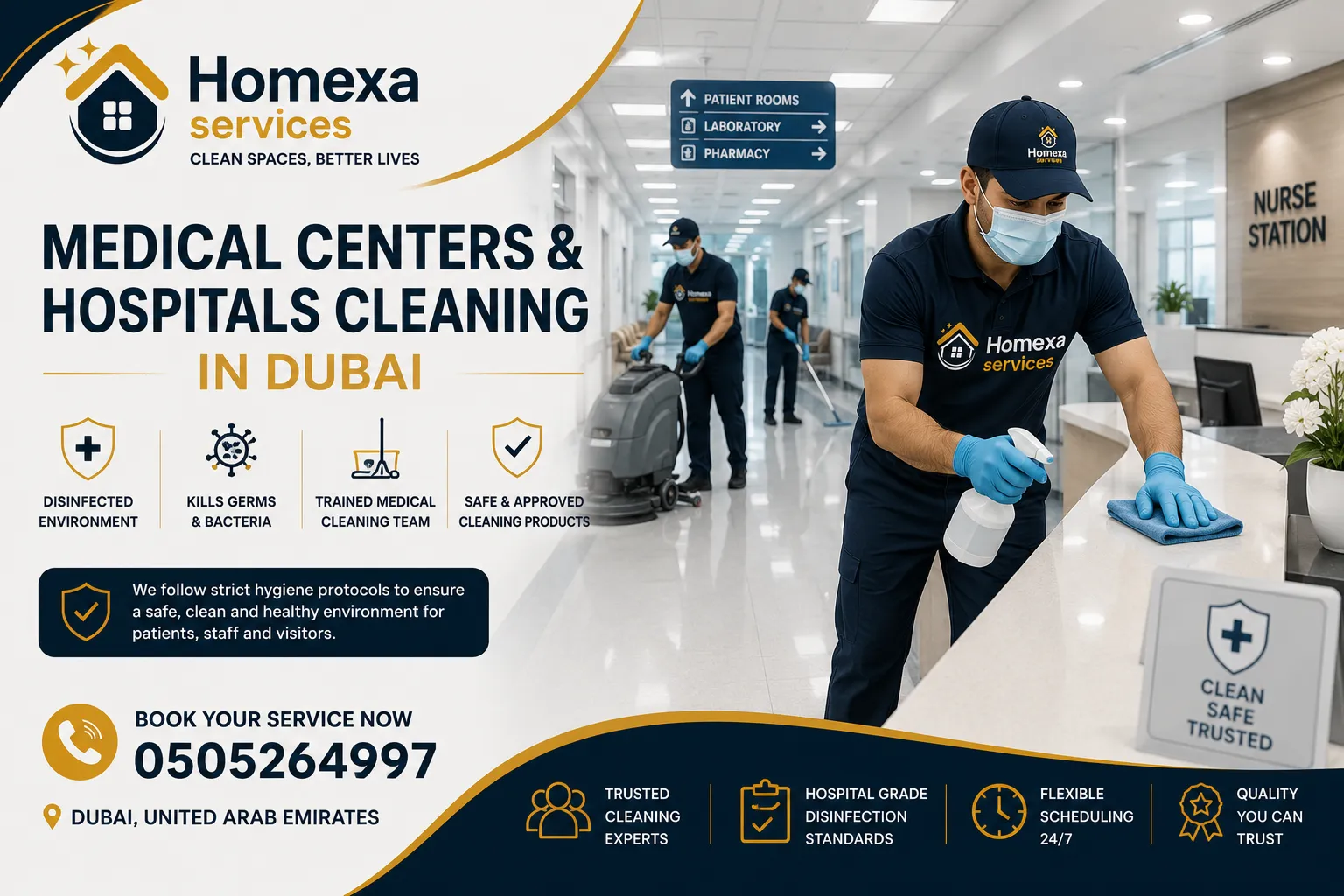
Medical facilities differ from normal interiors because they contain several areas with different levels of use. A facility may include a reception, waiting rooms, examination rooms, corridors, workstations, administrative offices, and shared facilities. Each area requires a suitable work sequence and cleaning approach.
Waiting areas receive constant movement from patients, visitors, and staff. Chairs, tables, doors, and nearby surfaces may be touched repeatedly. Examination rooms require more controlled work around existing furniture and equipment without opening cabinets, handling supplies, or moving items outside the agreed scope.
Surface materials also vary throughout the facility. Resilient flooring, coated metal, glass, plastic, synthetic leather, screens, and wooden furniture require different methods so that excessive moisture, sticky residue, or surface changes are avoided.
The service therefore begins with a site review covering requested rooms, restricted areas, working hours, patient movement, staff routes, surface materials, and management instructions. A clear sequence and service boundary are then agreed before the team starts work.
Each Medical Area Has a Different Cleaning Scope and Traffic Level
A waiting room does not have the same work requirements as an available examination room, workstation, main corridor, or washroom. Each zone is therefore reviewed separately.
This organisation helps the team work from lower-soil areas toward more frequently used sections while keeping washroom tools and work routes separate from examination and administrative areas.
Reception and Waiting Areas
Agreed chairs, tables, doors, walkways, floors, and accessible furniture exteriors can be included.
Examination Rooms
Accessible surfaces and floors are cleaned without handling medical instruments, supplies, medicines, or cabinet contents.
Workstations
Prior coordination is required to protect files, screens, electrical equipment, documents, and connections.
Corridors and Lift Areas
These areas receive continuous movement and can show shoe marks and surface buildup more quickly.
Doors and Entry Points
Agreed handles, entry buttons, door panels, and visible surfaces can receive focused attention.
Washrooms
Washrooms require a separate work route and separate tools from examination rooms, offices, and waiting areas.
Which Surfaces Receive Repeated Hand Contact?
Frequently used surfaces are identified within the agreed scope so the service does not focus only on floors and the general appearance of the facility.
Door Handles
Door handles receive repeated contact from patients, staff, visitors, and facility contractors throughout the day.
Waiting Chairs
Accessible armrests, backrests, edges, and wipeable exterior surfaces are treated according to the chair material.
Reception Counters
Available exterior sections are cleaned without moving documents, devices, files, or items outside the confirmed scope.
Lift and Access Buttons
Exterior surfaces are treated carefully while preventing moisture from entering electrical openings and surrounding edges.
How Is the Cleaning Team’s Route Organised?
A defined work route helps reduce the movement of dust, residue, and moisture between facility areas. Tools used in washrooms remain separate from those used in examination rooms, offices, and reception areas.
Administrative Areas
Lower-traffic office areas may be completed first when included in the approved service scope.
Available Examination Rooms
Empty rooms are cleaned after confirming that sensitive instruments and materials are protected.
Reception and Waiting Areas
Work is coordinated with appointment schedules and patient movement throughout the facility.
Corridors and Entrances
These areas may be completed after rooms so loose soil is not carried back into finished spaces.
Washrooms
Washrooms are completed using separate tools and remain outside the examination-room and office cleaning route.
How Are Surfaces and Equipment Protected During Cleaning?
Liquids are not sprayed directly onto screens, devices, controls, or electrical connections. The surface material is reviewed before any cleaning product or moisture is used.
Stainless Steel
Stainless steel is wiped in a controlled direction to reduce residue, visible lines, and unnecessary product buildup.
Medical-Equipment Plastic Exteriors
Accessible exterior plastic is treated without abrasive tools or methods that may scratch the surface.
Synthetic Leather
Wipeable chair and furniture surfaces are cleaned without saturating stitching, seams, or lower edges.
Screens and Devices
Only approved accessible exteriors are cleaned while moisture is kept away from openings, controls, and connections.
Glass and Mirrors
Fingerprints, dust, and wiping lines are reduced, including visible lower sections and edges.
Resilient Flooring
A suitable method is selected to reduce residue and maintain the existing floor surface.
Wooden Furniture
Moisture is controlled according to the finish and condition without unnecessarily wetting joints and edges.
Coated Metal
Dust and surface marks are treated without damaging the coating or leaving a sticky film.
Medical Facility and Hospital Cleaning Process
Work begins by confirming available areas and facility instructions, followed by dust removal, surface cleaning, floor cleaning, separate washroom work, and a final review before handover.
Brief Coordination with the Responsible Person
Available rooms, restricted zones, working hours, access instructions, and equipment that must not be touched are confirmed.
Inspecting Rooms and Surfaces
Floors, furniture, corridors, doors, washrooms, and requested high-touch points are reviewed.
Dividing the Facility into Work Zones
The room sequence, equipment route, and areas that must remain available to patients and staff are organised.
Removing Dust and General Loose Waste
Dust, crumbs, and suitable general waste are collected according to the agreed service scope.
Cleaning Frequently Touched Surfaces
Agreed handles, doors, chairs, counters, and accessible furniture exteriors receive focused attention.
Cleaning Available Examination Rooms
Accessible furniture exteriors, surfaces, and floors are cleaned without opening cabinets or handling medical instruments.
Cleaning Corridors and Floors
Dust, shoe marks, and suitable surface buildup are treated according to the flooring material.
Cleaning Washrooms with Separate Tools
Washrooms are completed through a separate work route away from examination rooms, offices, and reception areas.
Reviewing the Completed Areas
Floors, surfaces, corridors, equipment routes, and remaining moisture are checked before the area is reopened.
Handover to the Responsible Person
Completion of the agreed areas is confirmed and any visible issue identified during cleaning is reported.
What Can Medical Facility Cleaning Include?
The final scope is confirmed after reviewing the facility area, room quantity, business activity, operating hours, flooring materials, restricted areas, and management instructions.
Waiting Area Cleaning
Cleaning agreed chairs, tables, floors, edges, walkways, and accessible exterior surfaces.
Examination Room Cleaning
Cleaning accessible furniture exteriors, surfaces, and floors in rooms approved for entry.
Corridor Cleaning
Removing dust, suitable shoe marks, and normal buildup from daily movement areas.
Door and Handle Cleaning
Cleaning agreed visible door surfaces and frequently touched entry points.
Interior Glass and Mirror Cleaning
Reducing dust, fingerprints, and wiping lines from accessible glass surfaces.
Floor Cleaning
Selecting a cleaning approach according to the floor material, condition, and level of buildup.
Washroom Cleaning
Separate cleaning of agreed washroom floors, basins, surfaces, mirrors, and accessible fixtures.
Final Work-Area Arrangement
Removing cleaning equipment, reviewing corridors, and handing over the agreed areas.
How Is Disruption to Facility Operations Reduced?
Service timing, room sequence, corridors, and equipment movement are coordinated according to appointment schedules, patient traffic, staff requirements, and management instructions.
Selecting a Suitable Time
Wider cleaning work may be completed during quieter appointment periods or after normal operating hours.
Closing One Zone at a Time
A room or corridor section can be completed before the team moves to the next approved area.
Confirming Available Rooms
The team does not enter occupied or restricted rooms without approval from the responsible person.
Controlling the Equipment Route
Cleaning equipment is moved away from patients, active entrances, and busy staff routes wherever practical.
Reducing Remaining Moisture
Floors are reviewed before reopening to reduce the risk of leaving unnecessarily wet surfaces.
Coordinated Handover
Areas are reopened after the agreed work is completed and cleaning tools and residue have been removed.
Items Not Handled During General Medical Facility Cleaning
Some materials and areas require a written protocol, authorised specialist, separate approval, or additional controls. They are not automatically included in general cleaning.
Sharps are not collected or placed inside ordinary general-waste bags.
Medical waste requires approved containers and the facility’s authorised disposal system.
These situations require a defined protocol, approval, and separate specialist scope.
Isolation areas are not included without written instructions and suitable preparation.
Medicines, samples, clinical supplies, and containers are not opened, moved, or rearranged.
The service does not include dismantling, internal cleaning, calibration, or maintenance.
Specialist disinfection is not automatically included and must be defined through a separate agreement.
Unknown chemicals are not touched or moved before review by the facility representative.
What Can Cleaning Improve and What Requires a Separate Service?
General cleaning addresses removable dust, fingerprints, suitable stains, shoe marks, and ordinary surface buildup. It does not repair equipment faults, damaged flooring, leaks, mould sources, or hazardous conditions.
Conditions That May Improve Clearly
- Dust across furniture and accessible exterior surfaces.
- Fingerprints on doors, handles, mirrors, and glass.
- Shoe marks across corridors and suitable floor surfaces.
- Dust around accessible edges and corners.
- Crumbs and general loose waste in waiting areas.
- A dull appearance caused by removable surface soil.
Conditions Cleaning Alone Does Not Repair
- Medical equipment or electrical faults.
- Torn chairs and damaged furniture.
- Deep scratches and broken glass.
- Damaged floors or separated flooring layers.
- Leaks, hidden dampness, and internal mould sources.
- Medical waste, hazardous materials, and specialist incidents.
What Do We Need Before Confirming the Cleaning Appointment?
Facility photographs, approximate area, room quantity, operating hours, flooring materials, restricted zones, and management instructions help determine the required team, duration, and service scope.
Complete Facility Photos
Send wide images of the reception, waiting areas, corridors, and rooms requested for cleaning.
Approximate Floor Area
Provide the facility area, available measurements, and number of floors.
Room Quantity
Confirm the number of examination rooms, offices, washrooms, and other areas to be included.
Operating Hours
Explain the quieter appointment periods or after-hours access available to the team.
Flooring Materials
Confirm whether the facility contains vinyl, epoxy, tiles, or more than one floor type.
Restricted Areas
Identify rooms or departments that require permission or must not be entered.
Required Service Scope
Confirm the rooms, surfaces, corridors, washrooms, and accessible areas that require cleaning.
Dubai Location
Send the area together with parking, lift, security, access, and loading instructions.
Facility Instructions
Provide any rules related to uniforms, tools, products, access, or permitted working zones.
Frequently Asked Questions About Medical Facility Cleaning in Dubai
Direct answers about quotations, examination rooms, medical equipment, medical waste, disinfection, working hours, and recurring cleaning.
How much does medical facility cleaning cost in Dubai? +
The quotation depends on the facility area, number of rooms and floors, flooring materials, operating hours, restricted zones, and required service scope. Send photographs and details through WhatsApp on 0505264997 for an initial assessment.
Can cleaning be completed while patients are present? +
Work can sometimes be divided into controlled zones, but wider cleaning services are generally better completed during quieter appointment periods or after closing.
Does the service include cleaning medical equipment? +
Some accessible exterior surfaces may be cleaned after management approval. The service does not include dismantling, maintenance, internal parts, electrical connections, or calibration.
Does medical facility cleaning include full disinfection? +
Cleaning and disinfection are separate service scopes. Any disinfection work must be agreed separately, including the product, target surfaces, application method, and required contact period.
Does the team handle medical waste? +
Medical waste, needles, sharps, hazardous materials, and clinical waste are not included in general cleaning and must be handled through the facility’s approved system.
Can examination rooms be cleaned? +
Available examination rooms and accessible surfaces can be cleaned after patients have left and management instructions have been confirmed.
Are the same tools used in every area? +
Washroom tools remain separate from those used in examination, reception, waiting, and administrative areas. Further zoning can be arranged according to facility requirements.
Can a recurring cleaning schedule be arranged? +
A suitable recurring schedule can be discussed according to the facility size, operating hours, appointment traffic, room quantity, and required scope for each visit.