
Nursery Cleaning in Dubai
Nurseries require an organised cleaning plan that considers the daily movement of children and teachers, classroom layouts, play areas, eating spaces, sleeping rooms, entrances, and washrooms. Home Xa Services provides professional nursery cleaning in Dubai for agreed areas including classrooms, floors, tables, chairs, accessible cabinet exteriors, corridors, entrances, frequently touched surfaces, and available play equipment. Work is scheduled around nursery operating hours and management instructions, with clear boundaries around personal belongings, medicines, food, bedding, and restricted contents.
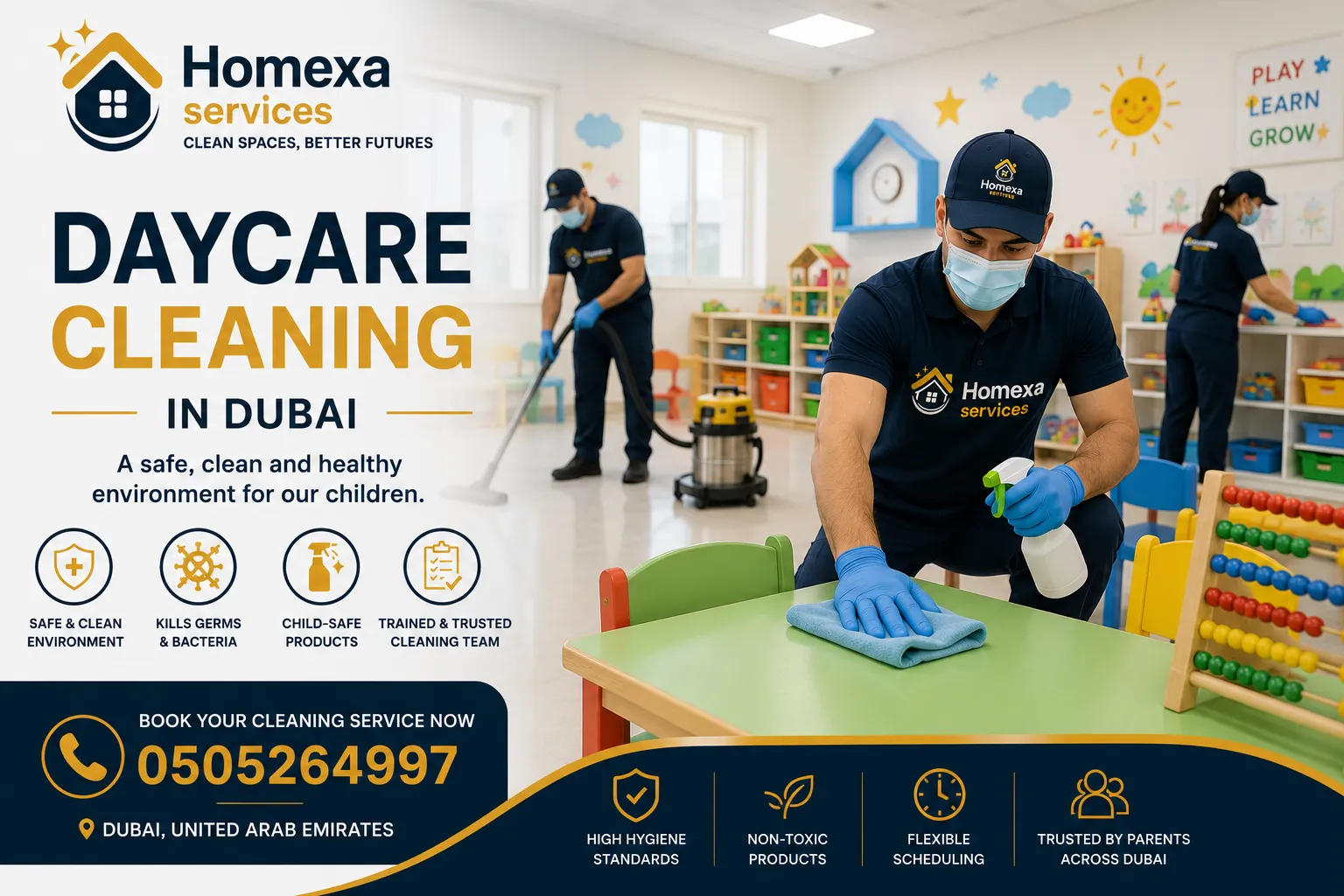
A nursery differs from an ordinary commercial space because children use floors, tables, chairs, toys, activity areas, and classroom surfaces directly and repeatedly. Daily movement between classrooms, corridors, entrances, and reception areas can also distribute dust, crumbs, and shoe marks quickly.
Dirt commonly collects around table legs, below chairs, along classroom corners, beside fixed carpet edges, and near toy-storage areas. Food marks, paint, craft materials, and activity residue may also appear on tables, floors, and wipeable surfaces.
Sleeping rooms, eating areas, and washrooms require separate tools and work routes from classrooms and play areas. Cabinets are not opened, personal belongings are not rearranged, and medicines or childcare supplies are not handled without clear approval from nursery management.
The service therefore begins by reviewing the nursery area, classroom quantity, flooring materials, play zones, eating and sleeping areas, washrooms, operating hours, and restricted contents. The property is then divided into controlled work zones, with wider cleaning preferably completed when fewer children are present.
Every Nursery Area Requires a Different Cleaning Sequence
A classroom is different from a play area, while an eating space has different requirements from a sleeping room or washroom. Tools, moisture levels, and work routes are therefore selected according to how each space is used.
This zoning helps reduce the movement of dust, crumbs, waste, and moisture from washrooms and eating areas into classrooms and children’s activity spaces.
Classrooms
Cleaning can include floors, tables, chairs, accessible edges, cabinet exteriors, and approved classroom surfaces.
Play Areas
Dust, crumbs, floors, and approved wipeable toy exteriors can be included according to the agreed scope.
Eating Areas
Tables, chairs, floors, and visible surfaces are cleaned after food, utensils, and personal containers have been removed.
Sleeping Rooms
Floors, edges, and furniture exteriors can be cleaned without handling personal bedding unless separately agreed.
Entrances and Corridors
These areas receive daily movement and commonly show outdoor dust, shoe marks, and dirt near doors.
Washrooms
Washrooms are completed through an independent route using tools kept separate from classrooms and play areas.
Which Nursery Surfaces Receive the Most Contact?
Frequently touched surfaces are identified within the agreed scope so the service covers classroom and activity details instead of focusing only on the floors.
Tables and Chairs
These surfaces are exposed to hands, food, colours, and activities and are treated according to their material and condition.
Door and Cabinet Handles
Handles receive repeated contact from children and staff moving between classrooms and shared spaces.
Accessible Toy Exteriors
Approved wipeable toy surfaces may be cleaned according to the toy material and management instructions, without dismantling parts.
Indoor Barriers and Rails
Visible and accessible sections that receive repeated hand contact throughout the day can be included.
How Are Toys, Furniture, and Nursery Surfaces Cleaned?
Surface materials are reviewed before cleaning. Toys, furniture, and flooring are not unnecessarily soaked, and liquids are kept away from electrical openings, screens, and internal components.
Plastic Toys
Accessible wipeable exteriors are cleaned without dismantling toys or allowing liquid to enter internal parts.
Wooden Furniture
Controlled moisture is used according to the finish and condition while avoiding unnecessary wetting of joints and edges.
Rubber Flooring
Suitable products and tools are selected to avoid leaving a slippery film or affecting the surface bond.
Fitted Carpet
The method depends on the fibres, backing, condition, ventilation, and drying time available before reopening.
Fabric and Cushions
Fabric items are not automatically included in surface cleaning and require separate confirmation according to their material.
Glass and Mirrors
Dust, fingerprints, and visible wiping lines are reduced from accessible interior glass surfaces.
Coated Metal
Exterior surfaces are cleaned without abrasive materials that may scratch the coating or leave sticky residue.
Screens and Electronic Items
Only approved exteriors are cleaned while moisture is kept away from openings, controls, and connections.
Nursery Cleaning Process
Work begins by confirming nursery instructions and available rooms, followed by dust removal, surface cleaning, floor cleaning, separate washroom work, inspection, and handover.
Coordinating with Nursery Management
The arrival time, available classrooms, restricted areas, access requirements, and management instructions are confirmed.
Inspecting Classrooms and Facilities
Floors, furniture, play areas, eating spaces, sleeping rooms, corridors, and washrooms are reviewed.
Confirming the Service Scope
Included surfaces, toys, carpets, furniture, and items that must remain untouched are clearly identified.
Dividing the Nursery into Zones
Classrooms, play spaces, eating areas, sleeping rooms, and washrooms are placed into separate work routes.
Collecting General Loose Waste
Paper, crumbs, and suitable ordinary waste are collected according to the agreed service scope.
Removing Dry Dust
Dust is removed from accessible edges, furniture exteriors, corners, and available lower sections.
Cleaning Frequently Touched Surfaces
Tables, chairs, handles, cabinet exteriors, barriers, and approved surfaces receive focused attention.
Cleaning Agreed Toy Surfaces
Approved wipeable toy exteriors are cleaned without dismantling, repairing, or rearranging toys without permission.
Cleaning Floors and Corridors
Dust, shoe marks, crumbs, and suitable stains are treated according to the flooring material.
Cleaning Washrooms Separately
Washroom tools remain outside the cleaning route used for classrooms, play areas, and eating spaces.
Reviewing Completed Areas
Floors and surfaces are inspected and cleaning equipment, waste, and unnecessary moisture are removed.
Handover to Nursery Management
Completion of the agreed scope is confirmed and any concern noticed during cleaning is reported.
What Can Nursery Cleaning Include?
The final scope depends on the nursery area, classroom quantity, flooring materials, play zones, operating hours, restricted contents, and management instructions.
Classroom Cleaning
Cleaning agreed floors, tables, chairs, edges, and accessible exterior surfaces.
Play Area Cleaning
Removing dust and crumbs from floors and approved wipeable toy exteriors.
Table and Chair Cleaning
Cleaning surfaces, legs, accessible edges, and approved furniture sections according to the material.
Door and Handle Cleaning
Giving visible door surfaces and frequently touched points focused attention.
Entrance and Corridor Cleaning
Removing dust, crumbs, and suitable shoe marks from daily movement areas.
Floor Cleaning
Selecting a method suited to tiles, vinyl, rubber flooring, or fitted carpet.
Interior Glass and Mirror Cleaning
Reducing dust, fingerprints, and wiping marks from accessible interior glass.
Washroom Cleaning
Separate cleaning of agreed basins, mirrors, floors, and accessible washroom surfaces.
How Is Disruption to Nursery Operations Reduced?
The service time, available classrooms, equipment route, and cleaning sequence are coordinated around children’s arrival, departure, and activity schedules.
Selecting a Quieter Working Period
Wider cleaning is preferably completed before nursery hours or after children have left.
Closing One Classroom at a Time
One available classroom can be completed before the team moves to the next approved area.
Avoiding Active Children’s Areas
Cleaning tools and products are not used around children without clear management approval and controlled access.
Controlling the Equipment Route
Cleaning tools are moved away from active entrances and children’s movement routes wherever practical.
Reducing Remaining Moisture
Floors are reviewed before a classroom or play area returns to use.
Coordinated Handover
The area is reopened after cleaning tools are removed and the agreed work has been inspected.
Items Not Automatically Included in General Nursery Cleaning
Some situations require a separate protocol, specialist service, or written management approval and are not handled automatically during general cleaning.
Medicines and personal childcare supplies are not opened, moved, or rearranged by the cleaning team.
These require a collection and disposal system defined by nursery management and are not treated as ordinary waste without agreement.
These situations require management notification and a separately defined protocol.
Food, bottles, plates, and utensils must be removed before tables and eating areas are cleaned.
The service does not include dismantling, internal cleaning, electrical repair, or maintenance.
Covers, pillows, mattresses, and personal bedding are not washed unless included through a separate scope.
Specialist disinfection is not automatically included and must define the product, surfaces, method, and contact period.
The service does not include repairing toys, furniture, flooring, leaks, plumbing, or electrical faults.
What Can Cleaning Improve and What Requires a Separate Service?
Cleaning addresses removable dust, crumbs, fingerprints, shoe marks, and suitable surface buildup. It does not repair permanent damage, broken toys, damaged flooring, or stains that have changed the underlying material.
Conditions That May Improve Clearly
- Dust on tables, chairs, and accessible cabinet exteriors.
- Crumbs and ordinary loose waste across floors.
- Fingerprints on doors, handles, mirrors, and glass.
- Shoe marks in entrances and corridors.
- Dust around accessible edges and corners.
- A dull appearance caused by removable surface dirt.
Conditions Cleaning Alone Does Not Repair
- Broken toys and loose or missing components.
- Torn cushions and damaged furniture.
- Deep scratches and permanent colour changes.
- Damaged floors or separated flooring layers.
- Leaks, hidden moisture, and internal mould sources.
- Special incidents requiring an authorised protocol.
What Do We Need Before Confirming the Nursery Cleaning Appointment?
Nursery photographs, approximate area, classroom quantity, flooring materials, play zones, operating hours, and the requested scope help determine the required team and service duration.
Complete Nursery Photos
Send photographs of classrooms, reception, corridors, play zones, eating areas, and washrooms.
Approximate Floor Area
Provide the total nursery area in square metres or any available measurements.
Classroom Quantity
Confirm the number of classrooms, activity rooms, and shared spaces requested for cleaning.
Operating Hours
Explain the period available before children arrive or after they leave.
Flooring Materials
Confirm whether the nursery contains tiles, vinyl, rubber flooring, or fitted carpet.
Play Areas
Send clear photographs of toys and surfaces requested within the service scope.
Required Service Scope
Confirm the classrooms, surfaces, corridors, floors, play zones, and facilities to be included.
Dubai Location
Send the area together with parking, lift, security, and access instructions.
Management Instructions
Provide any rules related to products, tools, restricted areas, or permitted working times.
Frequently Asked Questions About Nursery Cleaning in Dubai
Direct answers about quotations, classrooms, toys, carpets, mattresses, disinfection, working hours, and recurring cleaning.
How much does nursery cleaning cost in Dubai? +
The quotation depends on the nursery area, classroom quantity, flooring materials, play zones, level of buildup, working hours, restricted contents, and required scope. Send photographs and details through WhatsApp on 0505264997 for an initial assessment.
Can the nursery be cleaned while children are present? +
Wider cleaning is preferably completed before nursery hours or after children leave. Work may be divided into controlled areas only after management approval and clear access arrangements.
Does the service include toy cleaning? +
Approved wipeable toy exteriors may be cleaned according to the agreed scope. The service does not include dismantling, internal cleaning, repairs, or maintenance.
Does nursery cleaning include carpets and mattresses? +
Carpet, mattress, cushion, and fabric cleaning requires a separate scope based on quantity, material, condition, ventilation, and the drying time available.
Does nursery cleaning include full disinfection? +
Cleaning and specialist disinfection are separate services. Any disinfection work requires an agreement defining the product, target surfaces, application method, and required contact period.
Are the same tools used in every nursery area? +
Washroom tools remain separate from those used in classrooms, play zones, and eating areas. Further zoning can be arranged according to nursery management requirements.
Can the nursery be cleaned after operating hours? +
Yes. After-hours cleaning is often suitable for wider services because classrooms, corridors, and floors can be completed and inspected before children return.
Can a recurring nursery cleaning schedule be arranged? +
A recurring schedule can be discussed according to the nursery area, classroom quantity, operating hours, children’s attendance, and the required scope for each visit.